Diabetic Foot Care at Home: Daily Habits That Help

Key Takeaways
- •Daily foot checks are the most important habit for people with diabetes.
- •Keep feet clean, dry, and moisturized, but avoid lotion between the toes.
- •Call your doctor for any cut, sore, or sign of infection.
Diabetes can affect your feet in quiet ways, so diabetic foot care at home matters every single day. High blood sugar over time can damage nerves and reduce blood flow, which means small problems may go unnoticed until they become serious. The good news is that a few simple daily habits protect your feet and help you stay active and comfortable.
These diabetic foot care tips do not replace your doctor. They work alongside regular checkups and professional care to lower your risk and keep your feet in good shape. Preventing foot problems with diabetes starts with consistency.
Why feet need extra attention with diabetes
Over time, diabetes can cause two problems that affect your feet. Nerve damage, called neuropathy, can dull feeling, so you might not notice a cut, blister, or sore. Poor circulation can slow healing, which means even a small issue can take longer to get better.
That is why prevention is so important. The habits below help you catch problems early, when they are easiest to manage.
A simple daily inspection routine
Check your feet every day, ideally at the same time so it becomes a habit. Daily foot checks for diabetes should cover the whole foot, top and bottom, and between the toes.
If bending or seeing is hard, use a mirror on the floor or ask a family member for help. Look for:
- Cuts, scrapes, or blisters
- Redness, swelling, or warmth
- Cracks, especially around the heels
- Changes in color or shape
- Any sore that is not healing
Finding a problem early gives you time to act before it grows.
Washing, drying, and moisturizing
Wash your feet daily in lukewarm water, not hot. Test the temperature with your wrist or elbow first. Dry gently, especially between the toes, where moisture can linger.
Moisturize the tops and bottoms of your feet to keep skin soft, but avoid putting lotion between the toes. Too much moisture there can encourage fungal growth.
Safe nail care
Trim toenails straight across and file the edges gently. Avoid cutting into the corners, which can lead to ingrown nails.
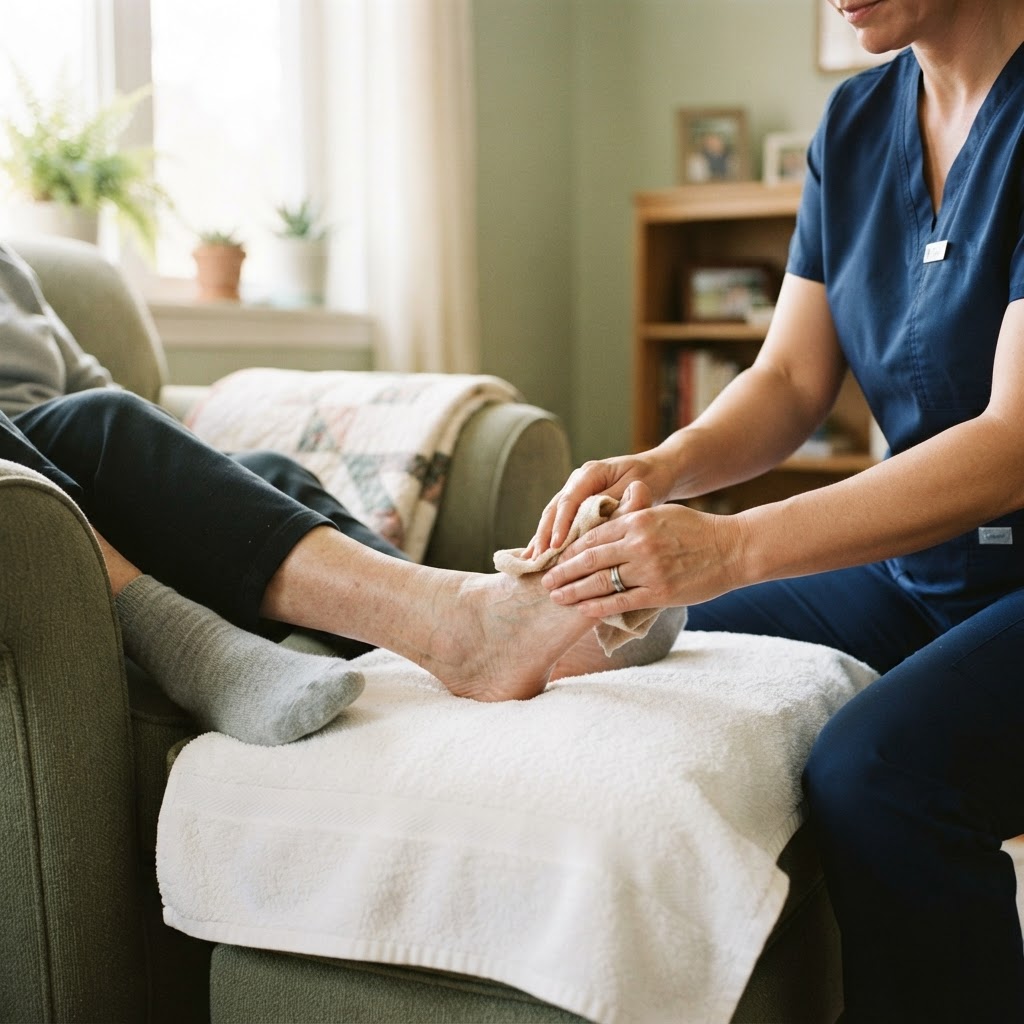
If your nails are thick, curved, or hard to reach, do not force them. A diabetic foot care nurse can trim them safely during a home visit. Our diabetic foot care service is built for exactly this kind of gentle, careful attention.
Protecting your feet from injury
Small injuries can become big problems, so protect your feet each day:
- Wear well-fitting shoes and socks, even indoors
- Check the inside of your shoes for pebbles or rough spots before putting them on
- Never walk barefoot
- Avoid hot water bottles or heating pads directly on your feet, since reduced feeling can lead to burns
These small choices add up over time.
Warning signs to report
Some signs deserve a prompt call to your doctor. Contact your provider if you notice:
- A cut, blister, or sore that is not healing
- Redness, swelling, warmth, or an unusual odor
- Pain, tingling, or new numbness
- A change in the color of your skin
- Any sign of infection
When in doubt, call. It is always better to check early.
How professional care supports your daily habits
Daily habits are the foundation, and professional care adds an expert set of eyes. A nurse can spot changes you might miss, care for difficult nails safely, and coordinate with your doctor when needed. For a closer look at what clinical foot care includes, read what a medical pedicure covers.
Across South Mississippi and Louisiana's North Shore, we bring this care to your home. If you have questions, reach out through our contact page.
Frequently Asked Questions
How often should I check my feet?
Every day. A quick check takes only a minute and helps you catch problems early.
Can I cut my own calluses?
No. Avoid cutting calluses or using over-the-counter removal pads, especially with diabetes. Let a professional reduce them safely.
When should I call my doctor?
Call for any cut or sore that is not healing, signs of infection, or new pain, tingling, or numbness. When in doubt, call.
Ready to schedule your visit?
Call 985-640-6688 or request care online and we will help you find a time that works for you or your loved one.
This article is for general education only and is not medical advice. Always follow the guidance of your doctor or surgeon, and contact them or call 911 for urgent concerns.
Related reading

Signs It's Time to Call a Foot Care Professional
Ingrown nails, thick toenails, cracked heels, and stubborn calluses can signal it is time for professional foot care. Know the signs.
What Is a Medical Pedicure? How It Differs From a Salon Pedicure
A medical pedicure focuses on foot health, not cosmetics. Learn how it differs from a salon pedicure and who benefits most from nurse-led care at home.