What Is a Medical Pedicure? How It Differs From a Salon Pedicure
Key Takeaways
- •A medical pedicure focuses on foot health and safety, not cosmetics.
- •It is ideal for seniors, people with diabetes, and anyone with limited mobility.
- •Nurse-led care follows clinical sanitation standards and can catch problems early.
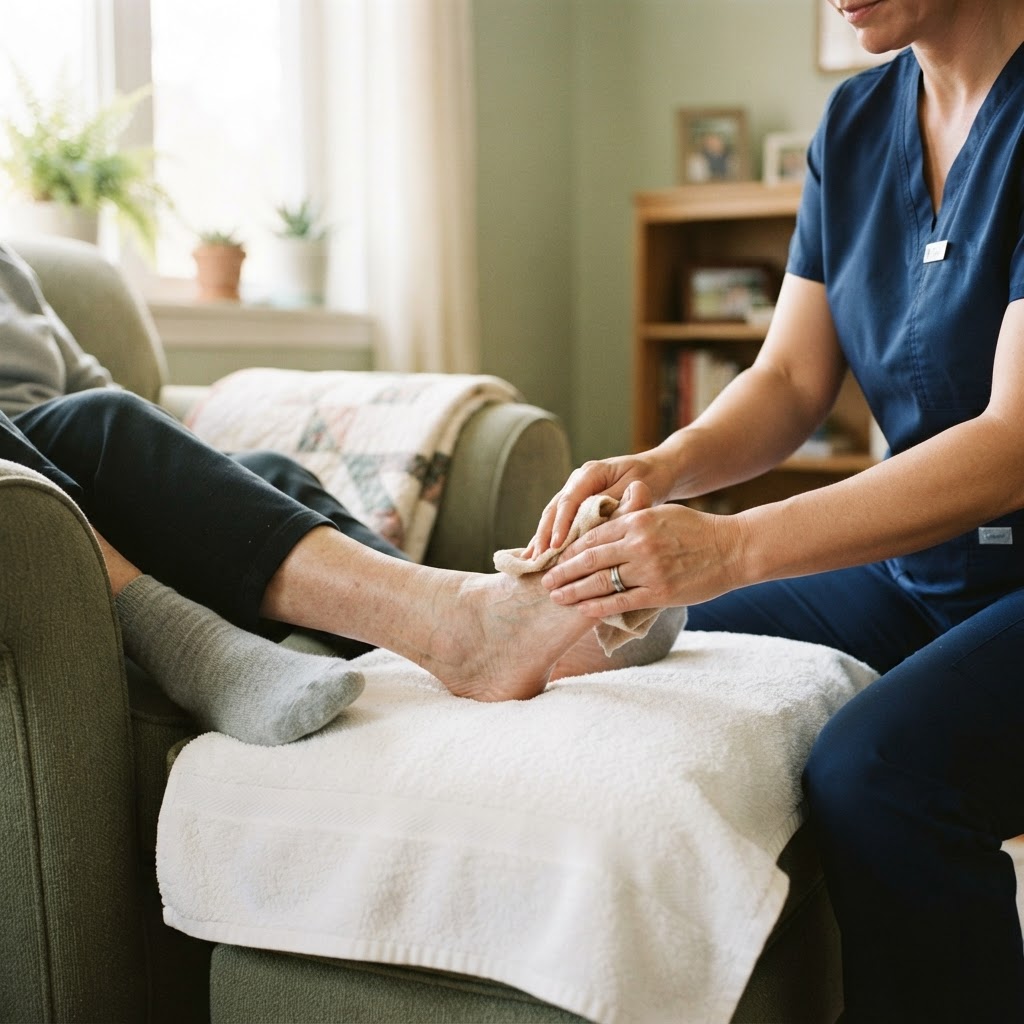
A medical pedicure is a clinical foot care visit focused on your health, not on appearance. Instead of polish and a relaxing soak, a trained provider carefully checks your feet, trims your nails safely, reduces calluses, and watches for early signs of trouble. For many people, this kind of care is more than a comfort. It is an important part of staying healthy, mobile, and independent.
If you have been weighing a medical pedicure vs regular pedicure, the difference comes down to training, tools, and purpose. A salon visit is cosmetic. A medical pedicure is preventive care delivered by someone who understands what to look for and how to keep your feet safe.
What a medical pedicure includes
A medical pedicure is built around your needs, not a menu of add-ons. During a typical visit, your provider will:
- Inspect your feet, skin, and nails for changes or concerns
- Trim and file toenails carefully, including thick or curved nails
- Reduce calluses and corns gently
- Check for cracks, redness, swelling, or signs of infection
- Offer guidance on daily foot care between visits
The goal is to keep your feet comfortable and well cared for, and to catch small problems before they grow.
Medical pedicure vs regular pedicure: the key differences
The clearest difference is the focus. A salon pedicure aims to make your feet look and feel nice for a short time. A medical pedicure focuses on foot health and safety.
Training matters too. A nurse or foot care professional brings clinical knowledge to every visit. They understand how conditions like diabetes and poor circulation change the risks, and they know when to pause and refer you to a doctor.
Sanitation is another difference. Medical foot care follows clinical standards for cleaning tools and protecting skin. For people with diabetes or fragile skin, that extra care helps lower the chance of infection.
Finally, there is the setting. An in-home medical pedicure brings care to you, which helps anyone who finds travel or sitting in a salon chair difficult.
Who benefits most from a medical pedicure
A medical pedicure is helpful for many people, and it is especially valuable for:
- Seniors who have trouble reaching or seeing their feet
- People with diabetes, who need careful nail and skin care
- Anyone with limited mobility after surgery, injury, or illness
- People with thick, brittle, or curved nails that are hard to trim safely
If everyday foot care has become difficult or risky, professional nurse foot care can take that worry off your plate. For family caregivers, a medical pedicure also offers peace of mind, because a professional keeps a loved one's feet cared for without the risk of doing it yourself.
How often should you have a medical pedicure
There is no single answer, because everyone's feet grow and change at different rates. Many people do well with a visit every 4 to 8 weeks. People with diabetes or other foot risks often benefit from more regular care.
Your provider can suggest a schedule based on what they see during your visit. The aim is consistency, so small changes are noticed early rather than after they become painful.
What to expect during your visit
A mobile medical pedicure begins with a short conversation about your health and any concerns. Your provider then examines your feet and explains what they see. Nail and callus care follows, done gently and at your pace.
You stay in the comfort of your own home, and you can ask questions at any time. After your visit, your provider may share simple tips for caring for your feet until the next appointment. To learn more about how a visit works, read what to expect at an in-home foot care visit.
Frequently Asked Questions
Is a medical pedicure the same as seeing a podiatrist?
No. A medical pedicure focuses on preventive nail and skin care. A podiatrist diagnoses and treats medical conditions of the foot. The two can work together, and your provider will encourage you to see a doctor or podiatrist for any concerns outside routine care.
Does a medical pedicure hurt?
Most people find it comfortable. Care is done gently and at your pace. If anything feels uncomfortable, tell your provider right away.
Will insurance cover it?
We are a private-pay service. We provide a detailed receipt that you may submit to your insurance, HSA, or FSA at your discretion.
Healthy feet support comfort, balance, and independence. Across South Mississippi and Louisiana's North Shore, we bring gentle, nurse-led foot care directly to your home. If everyday foot care has become difficult, our nail care for seniors can help, or you can reach out through our contact page.
Ready to schedule your visit?
Call 985-640-6688 or request care online and we will help you find a time that works for you or your loved one.
This article is for general education only and is not medical advice. Always follow the guidance of your doctor or surgeon, and contact them or call 911 for urgent concerns.
Related reading

Signs It's Time to Call a Foot Care Professional
Ingrown nails, thick toenails, cracked heels, and stubborn calluses can signal it is time for professional foot care. Know the signs.

What to Expect at an In-Home Foot Care Visit
Wondering what happens during in-home foot care? Walk through a visit from scheduling to aftercare with a nurse-owned mobile service.