Caring for an Aging Parent's Feet: A Guide for Family Caregivers
Key Takeaways
- •Caregivers can help with daily checks, comfort, and footwear.
- •Leave thick nails, calluses, and sores to a professional.
- •Contact a doctor for any sore, redness, or sign of infection.
Caring for an aging parent comes with many details, and their feet are easy to overlook. Elderly parent foot care is one of those quiet tasks that makes a big difference. Healthy feet help your parent stay comfortable, balanced, and independent, and a little regular attention can prevent problems that become painful.
As a family caregiver, you do not have to do it all yourself. This guide shares caregiver foot care tips for what you can safely do at home and when to bring in a professional.
What caregivers can safely do at home
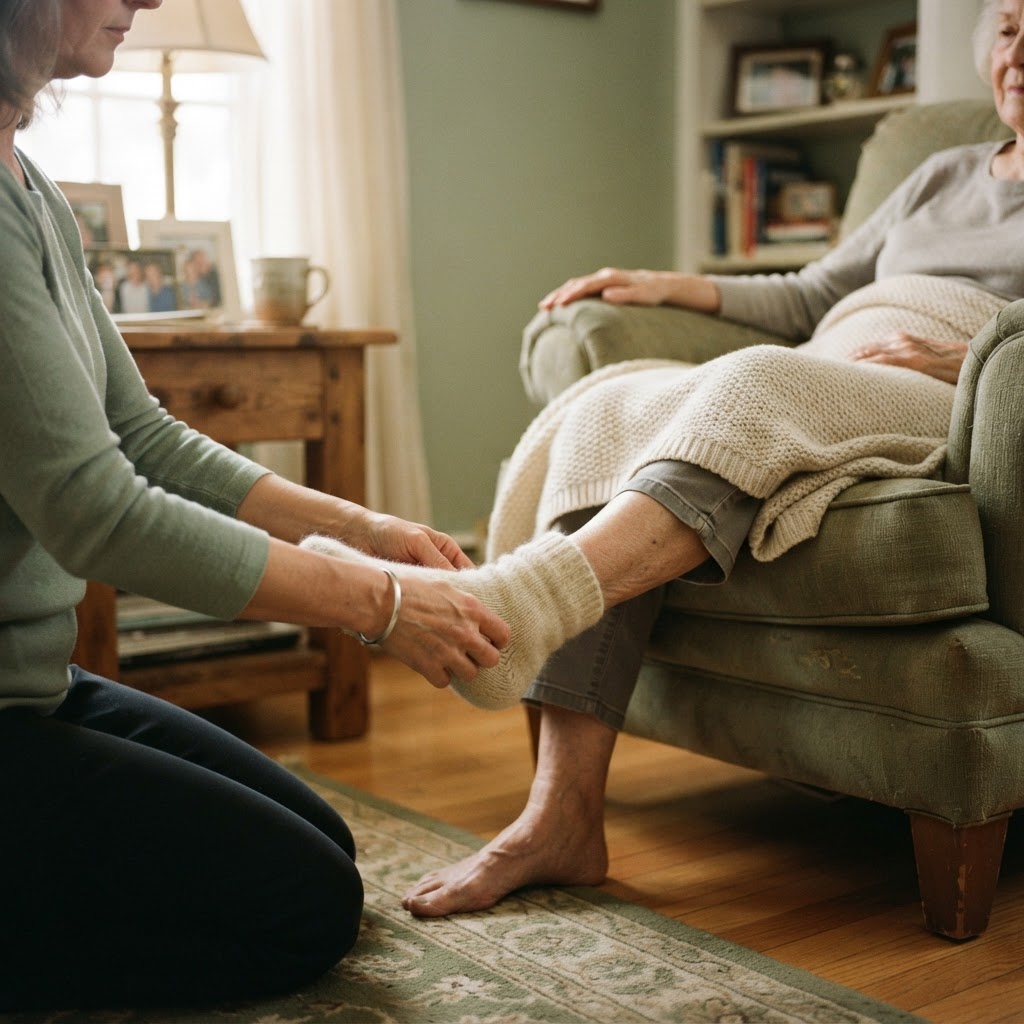
Much of foot care for family caregivers is about watching and supporting. You can:
- Help your parent check their feet each day for cuts, redness, or swelling
- Keep feet clean and dry, especially between the toes
- Apply lotion to the tops and bottoms of the feet, avoiding the spaces between toes
- Help choose well-fitting shoes and socks
- Remind your parent to avoid walking barefoot
These gentle habits protect your parent's feet without stepping into care that needs a professional.
A gentle daily check routine
A quick daily check takes only a minute. Help your parent sit comfortably, then look at the whole foot, top and bottom, and between the toes. If they prefer privacy, hand them a mirror or describe what you see.
Watch for cuts, blisters, redness, swelling, cracks, or changes in color. If your parent has diabetes, this daily check is especially important because they may not feel a small injury.
Comfort tips for aging feet
Small choices add up. Encourage your parent to:
- Wear soft, well-fitting shoes with room for the toes
- Choose socks without tight elastic that can mark the skin
- Keep feet moisturized to prevent dry, cracked heels
- Rest with feet up when they swell
Warm, not hot, water is best for washing, and feet should be dried gently, especially between the toes.
What to leave to a professional
Some care is best done by a trained provider. Leave these to a professional:
- Trimming thick, curved, or brittle nails
- Reducing deep calluses or corns
- Caring for any crack, sore, or wound
- Treating ingrown nails
Trying to manage these at home can lead to cuts or infection, especially for a parent with diabetes or fragile skin. In-home foot care for seniors brings the right tools and training to your parent's home. Our nail care for seniors is a gentle option that removes the risk.
How to bring up foot care respectfully
Foot care can feel personal, so approach it with care. You might say you noticed their nails look thick, or that you read about how foot health helps with balance. Frame it as a way to keep them comfortable and steady.
Offering to arrange a home visit often feels easier than asking them to travel. Many parents accept help more readily when it comes to them.
Signs to call a nurse or doctor
Contact a professional if you notice:
- A cut, blister, or sore that is not healing
- Redness, warmth, swelling, or an unusual odor
- Pain, tingling, or new numbness
- Thick or ingrown nails that are painful
- Any change in the color of the skin
For a broader look at warning signs, read when to see a foot care professional.
How to schedule a visit
We come to your parent's home across South Mississippi and Louisiana's North Shore, so there is no travel and no stress. Visits are by appointment only. To arrange care, reach out through our contact page and we will help you find a time that works.
Frequently Asked Questions
How often should I check my parent's feet?
Daily is ideal, especially if your parent has diabetes. A quick check takes only a minute.
Can I trim my parent's nails myself?
If the nails are thin and easy to reach, you may be able to. If they are thick, curved, or your parent has diabetes, a professional visit is safer.
What if I notice a sore?
Contact your parent's doctor right away. Sores deserve a prompt check, especially for someone with diabetes.
Ready to schedule your visit?
Call 985-640-6688 or request care online and we will help you find a time that works for you or your loved one.
This article is for general education only and is not medical advice. Always follow the guidance of your doctor or surgeon, and contact them or call 911 for urgent concerns.
Related reading

Why Foot Care Matters More as We Age
Foot health affects balance, comfort, and independence. Learn why foot care for seniors matters and how regular in-home care can help.

Signs It's Time to Call a Foot Care Professional
Ingrown nails, thick toenails, cracked heels, and stubborn calluses can signal it is time for professional foot care. Know the signs.